
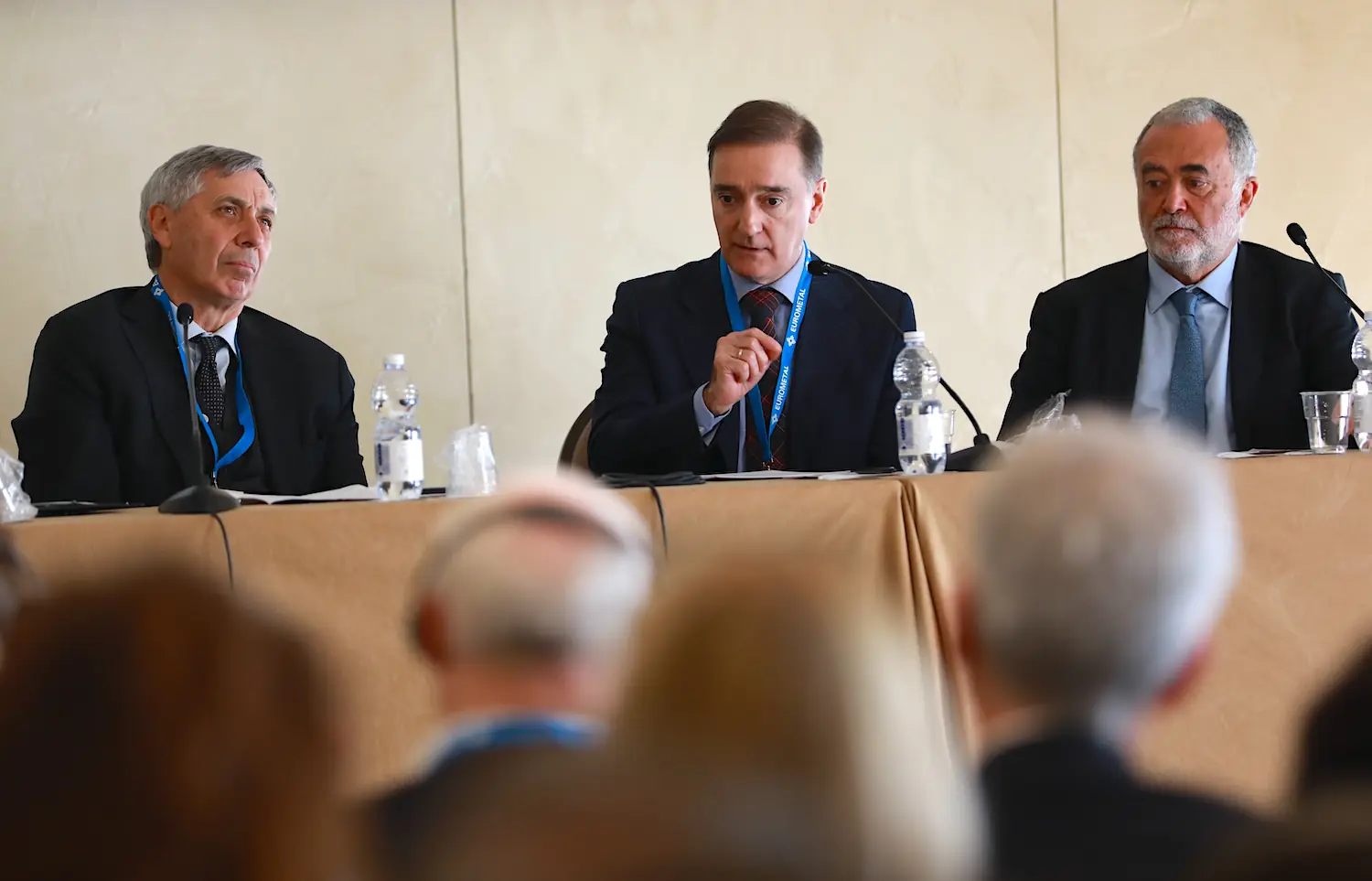
The main problem facing the European steel industry for end users is weak demand, not costs, with regulatory uncertainty further exacerbating market fragility, according to participants in a round table discussion during the EUROMETAL Southern European meeting in Milan on February 25, which was attended by Platts, part of S&P Global Energy.
During the session entitled "The New Normal of the Global Economy, while Europe is losing its way", the panelists stressed that trade protection alone would not restore competitiveness unless it was accompanied by initiatives to boost consumption and strengthen industrial ecosystems.
The rapid pace at which the steel industry had to decarbonize was also a major challenge, according to participants.
Fernando Espada of Tata Steel said that the market is "trying to find a new balance," noting that the previous momentum of the green deal and decarbonization has changed.
"The problem with all the legislation is its pace," Espada said, before making a comparison between the introduction of green steel and the slower-than-expected growth of the electric vehicle market in Europe.
"In 2022, everyone thought that we should adopt a green policy. But only for the first time, now I have two large projects on my desk, which are real "green steel" projects with significant volumes. The transition is happening, just at a different speed than the EU (European Commission) wants".The share of gross domestic product was not limited to Western economies, but was also evident in China, highlighting a broader structural transformation."Manufacturing and steel are increasingly dependent on services such as logistics, financing and financing," Rossi said, stressing that industrial competitiveness now depends on the strength of supportive service networks.
Espada said that steel serves as "the backbone of the economy," adding that the EU has begun to recognize that industrial policy "cannot be unilateral" and must be consistent with global developments.
The immediate problem has been weak demand, as buyers are holding off until there is clarity on the revised protective measures.
"As soon as there is clarity, the market will reorganize," he said, noting that suppliers from Taiwan, South Korea and Japan have already prepared competitive offers.
Platts estimated domestic hot-rolled coils in Northern Europe at 670 euros per ton from the Ruhr plant on February 26, and in Southern Europe at 670 euros per ton from the Ruhr plant on February 26.665 euros/ton free factory Italy, both indicators