
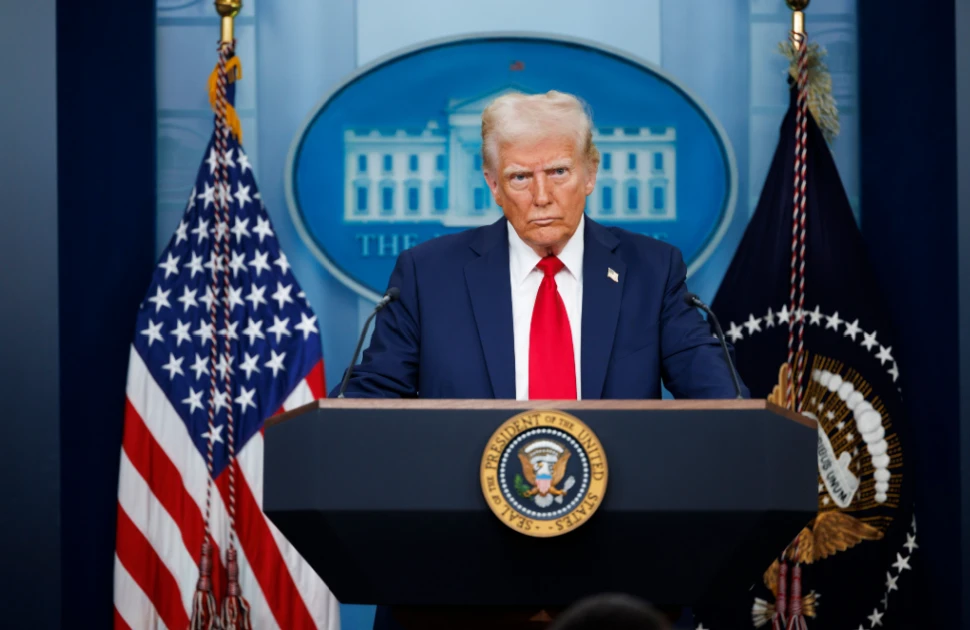
The decision of the U.
S. Supreme Court on February 20 changed the legislative framework for import tariffs for specific countries, which were the basis of President Donald Trump's international trade policy.
While the main steel import protections provided for in section 232 of the import tariffs remain unchanged – the 50% rate applies to all countries except the United Kingdom (25%) – the environment has changed. This has created new uncertainty regarding trade flows and prices for the numerous goods imported into the United States, many of which contain steel. This article, which focuses on questions and answers from members of the European Parliament, describes the implications for the US steel market.
What decision did the Supreme Court make regarding tariffs?
On Friday, February 20, 2026, the U.
S. Supreme Court ruled on the extent of the president's authority to impose tariffs under the International Emergency Economic Powers Act (IEEPA). The decision placed restrictions on the use of IEEPA as a broad trade policy tool, effectively removing the Trump administration's "reciprocal" tariffs on countries around the world.
In support of its decision, the court emphasized that the constitutional right to levy taxes, including tariffs, rests with Congress. The court found that the IEEPA did not provide clear enough permits for a broad tariff regime that was put into effect in a particular country.
Tariffs on iron and steel products are regulated in accordance with other legislation, section 232 of the Trade Expansion Act of 1962. Consequently, the court's decision did not affect them.
How did the Trump administration react?
After the Supreme Court's ruling that President Trump exceeded his authority by imposing import tariffs on specific countries under the IEEPA, the Administration quickly took steps to preserve tariff coverage by turning to an alternative legal authority.
President Trump initially announced a 10% global tariff on imports from all countries under Section 122 of the Trade Act of 1974, replacing invalid tariffs based on IEEPA. Subsequently, he stated in his post on the Truth social network that the rate would be increased to 15%. However, at the time of writing this article, the 10% tariff under Article 122 remains in force.
Unlike the country structure previously established under the IEEPA, the tariff under Article 122 applies uniformly to all trading partners. The legislative formalization of Article 122 allows such tariffs to be valid for up to 150 days without Congressional approval, after which their extension requires the permission of the legislative